


Midwinter on a small farm isn’t much to look at.
The fields are wet. The tunnels are dreary and half asleep. The days are short enough that you can lose the light between a cup of tea and a pinch of optimism. Nothing much appears to be happening, which in our modern, fast paced life feels suspicious, like you should be doing something.
But this is the point of it.
Midwinter has always been a pause. Long before calendars, spreadsheets, or veg box cut-off times, people marked this moment because it mattered. We have reached a critical point in the year. In just a few more rotations of the earth, the days will stop getting shorter and nature will begin to wake — or at least to yawn, and then stretch. It’s all slow and gradual, the light, imperceptibly at first, starts to return. Not enough to warm your hands, not enough to dry your socks — but enough to change the direction of travel.
On the farm, we feel it before we see it.
The soil stops being just cold and starts being… expectant. The overwintered crops hold on, doing the bare minimum — unhurried, not panicking. They know better than we do that their time to grow is coming.
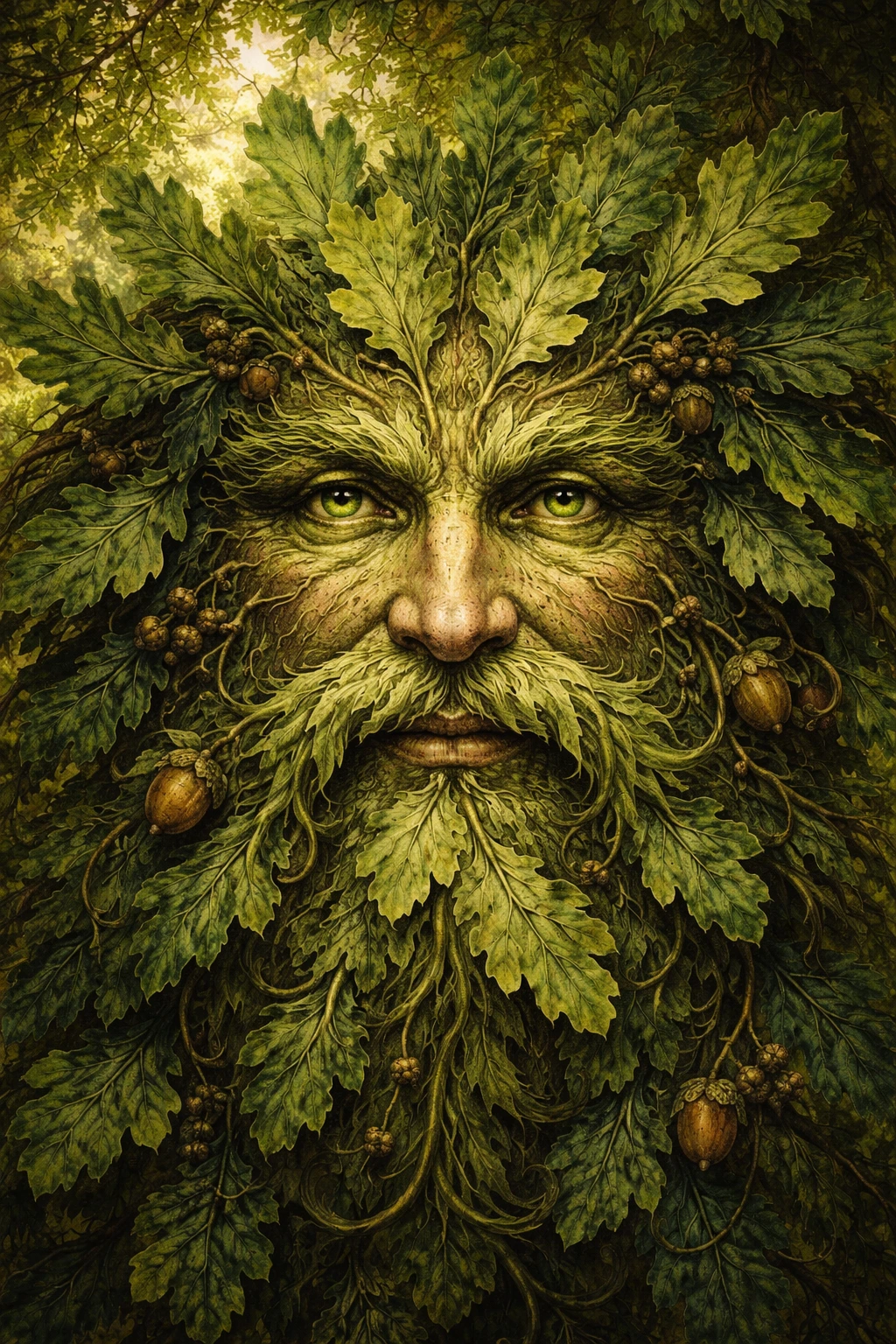
Which brings me to The Green Man — a creature part tree, part demon, wholly un-holy — yet you’ll find him carved into old churches, abbeys, and stonework all over Ireland and Britain. A face made of leaves. Sometimes half-hidden. Sometimes grinning. Sometimes unsettling. He’s older than Christianity, yet he turns up in sanctified places, tucked into corners and arches, as if the pillars of the church tried — and failed — to erase him, as though the strength of older beliefs persist in this one ungodly god.
The Green Man isn’t about spring flowers or summer abundance. He’s about death and resurrection. Growth that dies back and returns. Life that goes underground and waits. The bit in the middle that doesn’t look productive but absolutely is. He is neither good nor evil — or perhaps he is a little of both — and midwinter is his time.
Nothing above ground looks impressive, but everything that matters is already in motion — just slowly, quietly, out of sight. That’s farming, really. Most of the work happens when nobody’s watching. If you rush it, you break it. If you ignore it, you pay later. And if you thwart the Green Man and ignore his time, he will notice and exact recompense at a later date.
This his his time of year and he demands patience. From farmers, from customers, from all of us who understand that food doesn’t come from nowhere, and that everything has a season.
We’re not short of food right now, but we are a little short of variety. That’s not a failure of the system — it is the system. Eating seasonally in midwinter means roots, brassicas, stored crops, soups, stews, and repetition. It means nourishment rather than novelty.
And that’s fine.
The Green Man doesn’t burst out of the ground in midwinter shouting about abundance. He waits. He gathers himself. He trusts the cycle — and we should too.
You should trust the farmer and know that, behind the scenes, plans are being sketched. Seeds ordered. Beds rested. The first early sowings pencilled in for late January. Beds composted and covered; others sown with cover crops that look ragged now as they sit waiting for a few more hard frosts to kill them off. Their death will enrich the soil. The watchword now is restraint — the restraint demanded by the Green Man.
So yes, the farm feels quiet, but that’s because it’s meant to be.
If the veg boxes we deliver feel simple, that’s because winter is simple.
If you’re feeling a bit flat yourself — you’re probably right on schedule.
But remember, once we pass the solstice, the light is already coming back. The Green Man’s time will melt away, and spring will be upon us before we know it.
In the words of D:Ream, Things Can Only Get Better — even if it doesn’t quite feel that way yet.


